How Fixter Predicts Whether Your Car Will Pass Its MOT

There is a particular kind of silence that falls when you hand your car keys to an MOT tester. It is the silence of someone who has not checked their brake lights since the last time someone else checked them.
You are in good company. More than one in four cars fail their MOT at the first attempt, according to the latest DVSA figures. And here is the thing: very few of those fails are a surprise to the car owner. The worn tyre, the tired suspension, the bulb that gave up in March. The car has known for months. It just had no way of telling you.
So we built one. It is called MOT Predict, it is free, and it takes about as long as reading this sentence twice.
What is MOT Predict?
You type in your registration. A few seconds later you get two things:
A verdict: is your car likely to pass, could it go either way, or is it unlikely to pass?
Your risk areas: the parts of your car most likely to cause trouble, so you know where to look first.
How does it work?
No crystal ball, no tea leaves. Three steps:
We look up your car's history. Every MOT your car has ever had is on official record: the passes, the fails, the mileage each year, and the notes the tester left behind.
We compare it with cars like yours. A machine learning model looks at your car's make, model, fuel type, age, mileage and past results, and weighs them against what happened to millions of similar cars at the same stage of life.
We check 15 areas of the test separately. Brakes, tyres, lights, suspension, emissions, each get their own assessment. That is why the result can say "have a look at your suspension" and not just "good luck".
If that sounds abstract, think of it like a doctor. A good GP does not need to see you fall over to know that a sixty-a-day habit is bad news. They have seen enough patients to recognise the pattern. Our model has seen 47 million.
The numbers behind the prediction
A prediction is only as good as what it has learned from, so here is exactly what sits behind yours.
The model was trained on 20 years of official MOT data, up to 2026:
47 million cars
500 million individual tests
Over 1 billion tester comments
That last number matters more than it looks. Tester comments, including the advisories at the bottom of your certificate, are where trouble shows up first. "Slight play in the steering." "Brake pads wearing thin." They are your car leaving you voicemails. Most of us never listen to them. We read over a billion.
On top of the data sits almost 10 years of hands-on experience from Fixter's own network of mechanics, who sense-check what the model finds against what they see on the ramp every day.
And because anyone can claim their tool is clever, we marked our own homework. We ran the model against 1,000 real cars whose results we already knew. Of the cars we said were likely to pass, 93% did.
How to read your result
Your result comes in two parts.
First, the verdict. One of three:
Likely to pass. Cars like yours, with a history like yours, usually sail through. It's not a guaranteed pass but you are fairing better than others.
Could go either way. Nothing alarming, but enough risk that a quick check before the test is time well spent.
Unlikely to pass. Cars with this profile fail far more often than average, so it is worth getting the flagged areas looked at before test day.
Second, your risk areas. Up to three parts of your car to watch, each with a rating for how likely it is to cause trouble. They are drawn from the 15 areas the model assesses:
Brakes, tyres, lights, suspension, steering, emissions, exhaust, rust and structure, wipers and washers, windscreen, electrics, seatbelts, bodywork and number plates, fluid leaks, and a catch-all for anything that does not fit a box.
Even if you are likely to pass, you will still see risk areas. Think of them as a look ahead: the things cars like yours tend to develop next.
Does my prediction change my MOT?
No. Never. This one matters, so we will say it plainly.
Your prediction is for you. It is there to help you prepare, and that is the only thing we use it for.
It never affects the price. Your MOT costs the same whatever your prediction says.
It never changes the test. Every car gets the full MOT, every time. No checks are skipped because we expected a pass, and none are added because we expected trouble.
It never decides the result. That comes from the tester and the car in front of them on the day, not from anything our model said beforehand.
The only verdict that counts is the one on your certificate.
What a fail looks like up close
The photo below was taken by a Fixter partner garage during an MOT this summer. It is not a problem you would spot walking up to your car in the morning.
Rust where nobody looks. This is the underside of an 18-year-old Vauxhall Zafira, photographed on the ramp. The metal around the front subframe mounting has rusted right through, and it was the same story on both sides of the car. The tester recorded excessive corrosion seriously affecting the car's strength, which is an MOT fail. Putting it right needed specialist welding.
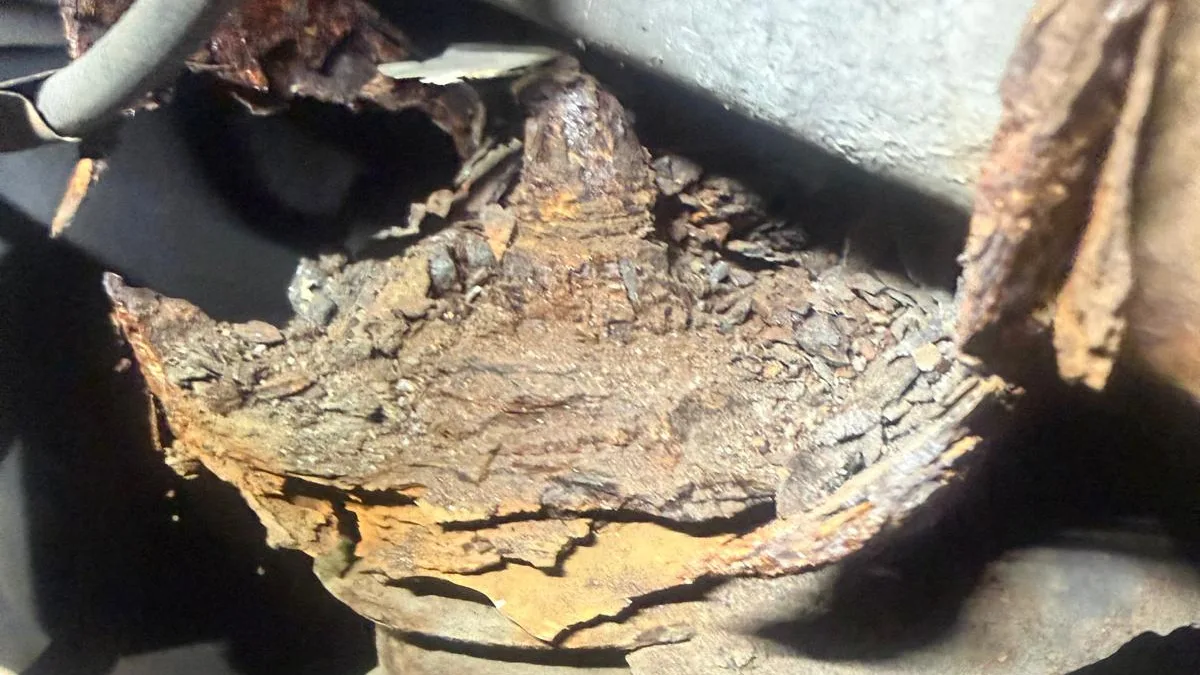
Rust like this does not appear overnight. It builds over years, it is far more common on older cars, and it often leaves a trail of corrosion advisories on earlier MOTs. That is exactly the kind of pattern MOT Predict is built to read. It cannot see under your car, but it does know how cars of your age, mileage and history tend to fare for your specific car model. If rust and structure show up in your risk areas, ask a garage to put the car on a ramp before test day, so the first person to find it is not the tester.
Why check before you book?
No nasty surprises. You find out what the tester is likely to find, before the tester does.
It can save you money. Sorting a worn part in advance is almost always cheaper than a fail, a rushed repair and a retest.
It is specific. You get the areas to check, not a vague feeling of doom.
It keeps you legal. Driving without a valid MOT can mean a fine of up to £1,000. Knowing what is coming gives you time to fix it before the old certificate runs out.
It is about safety, not just paperwork. The things that fail MOTs are brakes, tyres and lights. They are also the things that stop you, grip the road and let other people see you.
It is free and takes seconds. You can also share your result.
What it can't tell you
We would rather be upfront about this.
MOT Predict is a prediction, not a guarantee. It has read your car's history. It has not looked under your car. It cannot see the bulb that blew this morning, the pothole you met last Tuesday, or the wing mirror currently held on with optimism and tape.
A high-risk result is a nudge to get things checked, not a sentence. Plenty of cars we flag go on to pass, often because their owners did something about it first. And a good result is not a reason to skip the basics.
If your car is too new to have had an MOT, there is no history for us to read, so we will simply tell you we expect it to pass.
Whatever your result, five minutes on the driveway is still worth it:
Walk round the car with all the lights on, including brake lights and indicators
Check tyre tread and look for cuts or bulges
Test the wipers and top up the washer fluid
Look for chips or cracks in the windscreen
Start the engine and check no warning lights stay on
Quick answers to the classic worries
Will my car pass with the engine light on? Probably not. Since 2018, an engine management light that stays on once the engine is running is a fail in its own right. Get the fault code read before your test.
What about a cracked windscreen? It depends on where and how big. Damage directly in front of the driver is judged much more strictly than damage elsewhere on the screen.
My wing mirror is taped on. Am I doomed? Not automatically. What matters is whether it is secure and gives a clear view. But if it wobbles, it fails.
We answer these and more in full on the MOT Predict
So, what next?
Likely to pass? Lovely. Book your MOT and enjoy the calm.
Could go either way, or unlikely to pass? Get the flagged areas looked at first. Fixter can arrange your MOT and any repairs, collect your car and bring it back, so you never have to set foot in a garage.
Your MOT does not have to be a leap in the dark.
Check your car with MOT Predict · Book your MOT
Not sure if it's serious?

One of our in-house experts will call you back and tell you whether it's safe to drive.
Prefer to call?0330 808 9527